
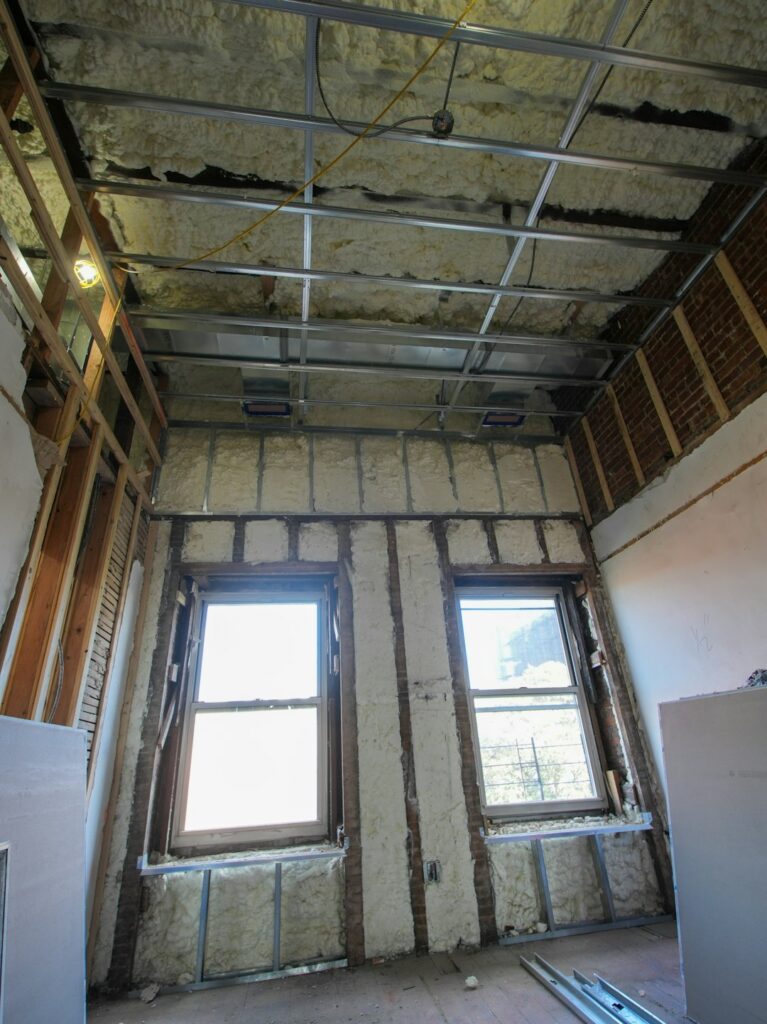
A roof leak is more than a wet spot on the ceiling. Water can travel through insulation, framing, drywall, and electrical spaces before the visible signs appear. In East Aurora, NY, seasonal rain, heavy snow, ice buildup, freeze-thaw cycles, and wind can all contribute to roof problems that gradually affect a home’s structure.
How does a roof leak damage the structure of a house?
A leaking roof allows moisture into materials that are designed to remain dry. Over time, repeated wetting can weaken wood, soften drywall, loosen fasteners, corrode metal connections, and create conditions for mold growth.
The damage may begin in the attic or roof deck and then spread downward. Water does not always travel straight from the roof opening to the stain inside the home. It can follow rafters, trusses, insulation, plumbing lines, wiring, and the top plates of exterior walls.
Structural damage is more likely when a leak continues unnoticed, occurs repeatedly, or affects an area that cannot dry properly.
What parts of a home are most vulnerable?
Several building components may be affected by a leaking roof:
- Roof decking: Plywood or oriented strand board beneath the shingles can swell, soften, delaminate, or lose strength.
- Rafters and trusses: These support the roof and may deteriorate if they remain damp for long periods.
- Wall framing: Water can reach the top plates and studs of exterior walls, causing staining, decay, or hidden moisture.
- Insulation: Wet insulation loses much of its insulating ability and may hold moisture against wood surfaces.
- Ceilings and drywall: These materials may stain, sag, crumble, or eventually collapse if heavily saturated.
- Fasteners and metal connectors: Persistent moisture can cause corrosion in nails, screws, hangers, and other structural hardware.
- Attic ventilation components: Moisture can damage baffles, vents, and surrounding materials, especially where airflow is limited.
Not every leak causes immediate structural failure. The concern is that damage can accumulate while the interior appearance still seems minor.
Can a small ceiling stain indicate serious damage?
Yes. A small stain does not reveal how long water has been present or how far it has traveled. It may result from a single wind-driven rain event, but it can also mark the lowest point of a much larger wet area above the ceiling.
A stain that grows after rain or snowmelt suggests that water is still entering. Bubbling paint, soft drywall, sagging ceiling panels, or a musty odor may indicate that the material has absorbed significant moisture.
A ceiling stain below an attic does not necessarily identify the exact roof problem. The source could be damaged shingles, flashing, a roof penetration, an ice dam, or water entering near a roof edge and moving laterally.
Why are winter conditions especially hard on roofs?
Cold-weather conditions can create several pathways for water intrusion. Snow may accumulate on the roof, and ice can form along eaves when heat escapes from the living space and melts snow unevenly. Water trapped behind an ice buildup may move beneath roofing materials and into the attic.
Freeze-thaw cycles can also enlarge small cracks or openings. Water enters a vulnerable joint, freezes, expands, and places additional pressure on the surrounding material. Repeated cycles may worsen defects around flashing, chimneys, vents, skylights, valleys, and roof edges.
Heavy snow adds weight to the roof system. A sound roof is designed to carry expected loads, but moisture-damaged wood may have reduced strength. Sagging roof lines, new cracks in ceilings, doors that begin sticking, or unusual popping sounds deserve prompt attention, particularly after substantial snowfall.
Can a roof leak cause mold or unhealthy indoor conditions?
A roof leak can create conditions that support mold growth, especially when insulation, wood, drywall, or other porous materials remain damp. Mold may develop in concealed areas before it becomes visible inside the home.
Possible warning signs include:
- Persistent musty odors
- Dark or discolored areas on attic wood
- Damp insulation
- Peeling paint or wallpaper
- Repeated condensation near the affected area
- Mold-like spotting on ceilings or walls
Mold is not the same as structural damage, but the two problems can occur together. Moisture that supports mold can also contribute to wood decay and corrosion. People with asthma, allergies, or respiratory sensitivities may notice symptoms more readily in damp indoor conditions.
How can water damage electrical and mechanical systems?
Roof leaks can reach electrical wiring, junction boxes, recessed lights, attic fans, and other equipment. Water near electrical components creates a shock and fire hazard, even when no obvious problem is visible.

A light fixture that drips, flickers, trips a circuit, or develops staining around its trim should not be treated as a cosmetic issue. Avoid touching wet electrical equipment and keep clear of areas where water is entering near wiring.
Water may also affect heating and cooling equipment, ductwork, bathroom exhaust fans, and insulation around mechanical penetrations. These systems can be difficult to inspect because much of the equipment is located above ceilings or inside attic spaces.
What should residents do after discovering a leak?
The first priority is to reduce immediate danger and limit additional damage.
If water is actively entering:
- Place containers beneath drips and move furniture or belongings away from the area.
- Avoid standing under a sagging ceiling.
- Keep away from wet light fixtures, outlets, switches, and visible wiring.
- If it can be done safely, shut off power to the affected circuit; do not enter a wet area to reach an electrical panel.
- Photograph visible damage for household records and insurance documentation.
- Check the attic only if it is dry, accessible, and safe to enter.
Do not climb onto a wet, icy, or snow-covered roof. Roof surfaces become especially hazardous during freeze-thaw weather, and hidden damage may make walking unsafe.
Temporary measures may limit water entry, but they do not confirm whether roof decking, framing, insulation, or electrical components have been affected. Structural concerns, active electrical hazards, substantial ceiling damage, or unsafe access conditions require evaluation by an appropriately qualified professional.
How can hidden structural damage be recognized?
Hidden damage often becomes apparent through changes rather than a single dramatic symptom. Watch for recurring stains, soft spots, sagging surfaces, swollen trim, peeling finishes, musty smells, or areas that remain cool and damp.
In the attic, warning signs include darkened wood, mold-like growth, rusted fasteners, wet insulation, daylight visible through unintended openings, and water marks extending along rafters or roof decking.
The timing of symptoms also provides useful information. Damage that appears after heavy rain may involve flashing or roof-covering defects. Problems that occur during snowmelt may relate to ice buildup or concealed openings near roof edges. Moisture that appears during cold weather without precipitation may involve condensation, though a roof leak should not be ruled out without inspection.
Is every attic moisture problem caused by a roof leak?
No. Condensation can resemble a leak. Warm, moisture-filled indoor air may enter a cold attic through gaps around light fixtures, attic hatches, plumbing penetrations, or ductwork. If ventilation is inadequate, that moisture can condense on cold roof surfaces and framing.
Bathroom and kitchen exhaust should discharge outdoors rather than into an attic. Wet insulation, frost on roof decking, or widespread moisture across the attic may point toward ventilation or air-sealing problems instead of one isolated roof opening.
Because leaks and condensation can occur at the same time, the source should be identified before repairs are planned. Covering a stain without correcting the moisture pathway allows damage to continue out of sight.
IMAGE_ALT:
Water stains spread across a ceiling beneath damp attic insulation and darkened roof framing.
