
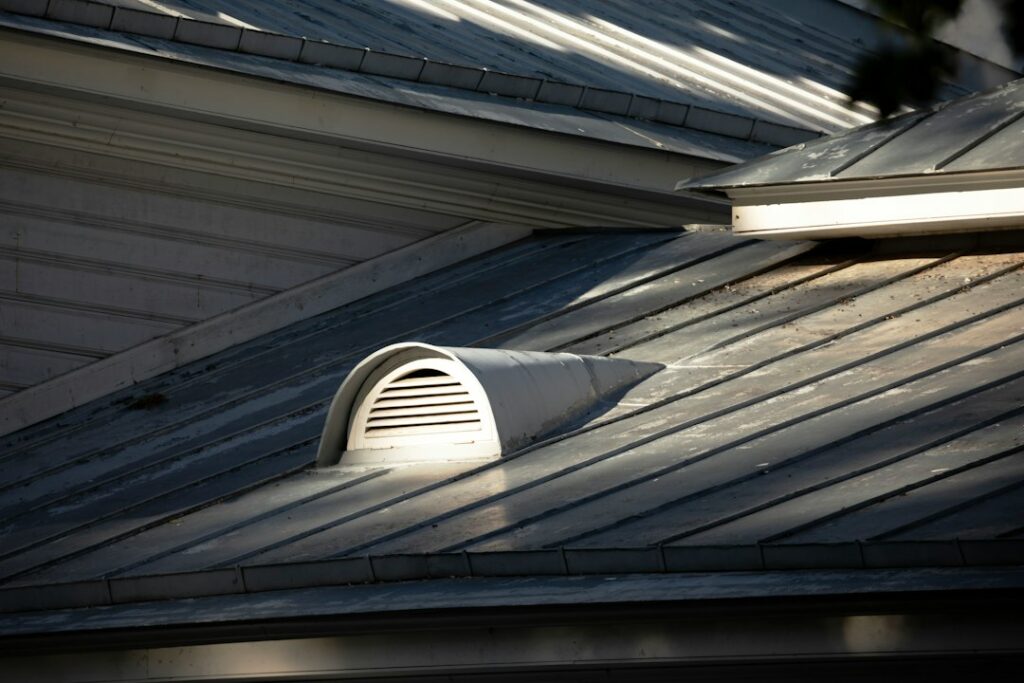
Rain on a roof can be soothing, but heavy downpours may also create a sharp drumming sound indoors. The amount of noise depends on the roof covering, attic construction, insulation, ceiling materials, roof shape, and even where rainwater lands after leaving the roof.
For households in East Aurora, NY, sound can be especially noticeable during spring storms, summer thunderstorms, and long periods of wet weather. Several improvements can reduce the noise, although no roof system will make heavy rain completely silent.
Why does rain sound louder on some roofs?
Metal roofing is often blamed for noisy interiors, but the roof covering is only one part of the sound pathway. A thin roof assembly with little insulation or an unfinished attic usually allows more sound into the rooms below.
Rain noise tends to be more noticeable when:
- The roof has exposed metal panels over a lightly framed structure.
- The attic contains little insulation.
- The ceiling below the attic is unfinished or has gaps around fixtures.
- The roof has a low-slope section where water strikes with greater force.
- Gutters, downspouts, or flashing are loose and vibrate during rainfall.
- Water drops from an upper roof onto a lower roof, porch roof, or exterior ledge.
- Rain falls directly into an open or partially blocked gutter.
A roof with asphalt shingles may also become loud if the attic and ceiling provide little sound absorption. Conversely, a metal roof can be relatively quiet when installed over solid decking, insulation, and a finished ceiling.
Can attic insulation reduce rain noise?
Yes. Adding or improving attic insulation is often one of the most effective ways to reduce airborne rain noise, particularly when the ceiling below the attic is the main route for sound.
Fiberglass and mineral wool insulation can absorb some sound energy between roof framing members. Blown-in insulation can also help fill irregular spaces and reduce sound movement through the attic floor. The result depends on the insulation depth, density, installation quality, and whether air gaps remain around the ceiling.
Insulation should not be placed in a way that blocks required ventilation channels at the eaves or roof edges. In cold-weather regions, maintaining proper attic ventilation helps limit moisture problems and ice-related roof issues. Insulation and ventilation need to be planned together rather than treating the attic as a space to fill completely.
If the attic already has insulation, adding more may provide only a modest reduction unless other sound paths are addressed.
Does a finished ceiling make a roof quieter?
A finished ceiling can reduce indoor rain noise by adding mass and sealing openings. Drywall, plaster, and other dense ceiling materials generally block more sound than exposed rafters, thin paneling, or suspended ceiling tiles.
Noise can still travel through weak points, including:
- Recessed light fixtures
- Attic access panels
- Heating and cooling registers
- Electrical boxes
- Plumbing penetrations
- Gaps around ceiling edges
An attic access hatch is a commonly overlooked source of sound leakage. A lightweight, poorly fitted panel may allow noticeably more noise than the surrounding ceiling. Weatherstripping around the hatch and adding a properly fitted, insulated cover can improve both sound control and energy performance.
Any ceiling work near wiring, ventilation equipment, or recessed lighting should be approached carefully. Some fixtures require specific clearances from insulation and other materials.
What roof materials help limit rain noise?
Roof materials affect sound, but the complete roof assembly matters more than the surface alone.
Asphalt shingles usually produce less noticeable rain noise than a bare metal surface because their layered construction and granular texture disperse some impact energy. Heavier roofing materials may also transmit less sound, although structural capacity must be considered before changing roof coverings.
Metal roofing can be made quieter with:
- Solid roof decking beneath the panels
- An underlayment between the roof covering and decking
- Insulation below the decking or at the attic floor
- A finished ceiling with sealed penetrations
- Properly secured panels and trim
Underlayment is mainly installed for water management and roof protection, but some types also provide limited sound dampening. It should not be viewed as a complete solution for interior noise.
Replacing a roof covering solely to reduce rain sound is usually an expensive approach. Improving the attic, ceiling, or drainage details may provide a better result if the roof is otherwise in serviceable condition.
How can gutters and downspouts create extra noise?
Sometimes the loudest sound is not rain striking the roof. It is water moving through gutters or hitting metal, siding, a lower roof, or the ground.
Loose gutter sections may rattle during rainfall. Downspouts can amplify the sound of water inside a wall or next to a bedroom. A downspout that discharges onto a hard surface can create a repetitive splashing sound.
Useful maintenance steps include:
- Tightening loose gutter hangers and downspout straps.
- Checking for sections that vibrate against siding or trim.
- Keeping gutters clear so water does not overflow from a height.
- Confirming that downspouts direct water away from foundations.
- Inspecting locations where upper-level water falls onto lower roof sections.
- Adding a suitable splash-control detail where water strikes a hard surface.

Do not place improvised materials inside a gutter if they could trap leaves, restrict drainage, or deteriorate and wash into the downspout. Any sound-reduction measure must preserve proper water flow.
Can roof repairs reduce rain noise?
Yes, if the noise comes from movement or vibration rather than normal rainfall. Loose metal panels, flashing, vents, ridge caps, soffit panels, and gutter components can produce tapping, rattling, or buzzing sounds during storms.
A useful distinction is:
- Steady drumming: Often related to rain striking the roof surface and passing through the roof assembly.
- Intermittent tapping: May indicate a loose component, falling debris, or water drops landing on a projecting surface.
- Rattling or buzzing: May point to loose flashing, siding, vents, or metal trim.
- Gurgling or splashing: Often associated with gutters and downspouts.
A roof inspection is warranted when a new sound appears suddenly, especially after strong wind, heavy snow, or freeze-thaw conditions. In the local climate, repeated temperature changes can loosen fasteners, shift materials, and expose small gaps over time.
Are acoustic panels useful under a roof?
Acoustic panels can reduce reflected sound inside a room, but they do not stop rain noise from entering the building. They are more useful for reducing echo after sound has already entered the space.
For a bedroom, office, or finished attic, heavier curtains, upholstered furniture, rugs, and wall treatments may make rainfall seem less sharp by absorbing reflected sound. These measures are most helpful in rooms with hard floors, bare walls, and high ceilings.
They should be considered comfort improvements rather than substitutes for insulation, ceiling repairs, or roof maintenance.
What should homeowners check before making changes?
Start by identifying where the sound is strongest and whether it occurs only during rain or also during wind. Listen from the attic, upper floors, and rooms beneath roof edges. Compare the sound near gutters, downspouts, skylights, dormers, and roof transitions.
Before adding insulation or enclosing an attic, check for:
- Roof leaks or damp insulation
- Mold or persistent musty odors
- Blocked ventilation paths
- Damaged roof decking
- Unsafe wiring or lighting installations
- Evidence of pests
- Condensation during cold weather
Wet insulation should not simply be covered. Water entry, ventilation defects, and damaged materials need to be addressed first. Roofing work on steep slopes, icy surfaces, or areas near electrical equipment presents a genuine safety risk and may require qualified assistance.
For most homes, the practical order is to correct loose exterior components, improve attic insulation where appropriate, seal ceiling openings, and then consider larger changes to roof materials or interior finishes. This approach addresses both the noise and the underlying roof performance without sacrificing ventilation, drainage, or winter durability.
