
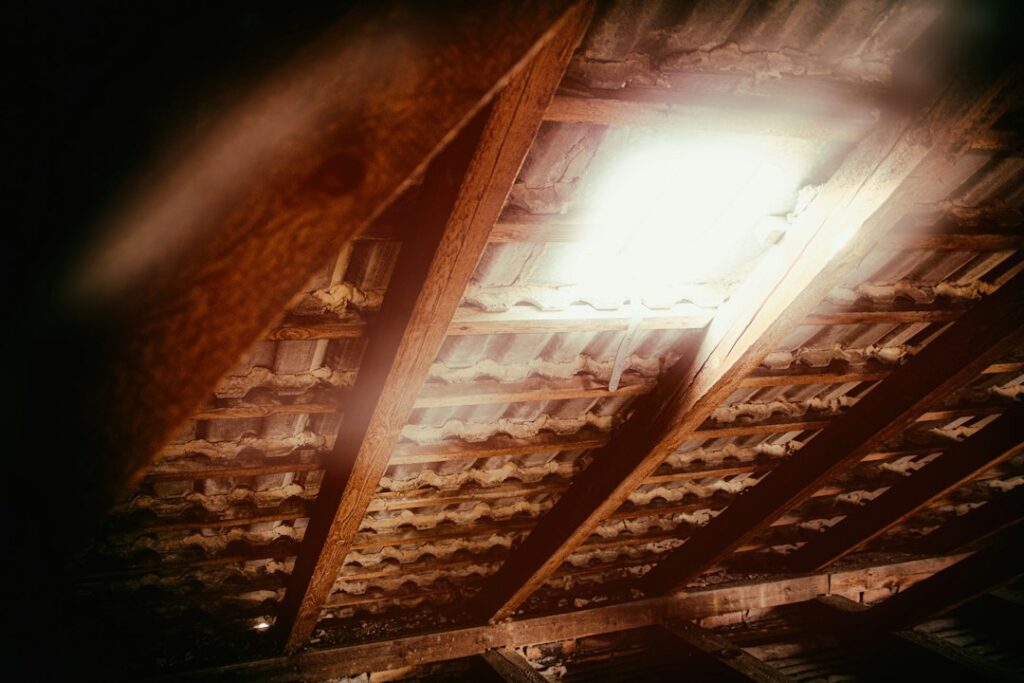
Why roof entry points are easy to miss
Roof pests usually enter through small weaknesses rather than obvious holes. A lifted shingle, loose soffit panel, damaged vent screen, or gap at the roof edge can provide enough space for an animal or insect to get inside.
In East Aurora, NY, seasonal snow, wind, ice, rain, and repeated freeze-thaw cycles can gradually loosen roofing materials and trim. Older homes may also have small openings created by aging wood, past repairs, or changes around chimneys, vents, and additions.
Once a pest reaches the attic or roof cavity, it may remain hidden for weeks. The first noticeable sign is often scratching, droppings, an unusual odor, or damage to insulation.
Which pests commonly get into roofs?
Different pests use different entry points and create different types of damage.
Squirrels often enter through roof edges, soffits, gable vents, and areas where tree branches touch or closely approach the roof. They can chew through wood, plastic, and some types of screening. Nesting material may block ventilation openings or create a fire concern near electrical wiring.
Mice can fit through openings much smaller than many homeowners expect. Gaps around utility lines, roof-to-wall intersections, attic vents, and damaged fascia may lead into wall cavities or insulated attic spaces. Mice commonly leave small droppings, shredded nesting material, and gnaw marks.
Bats may use narrow gaps along flashing, soffits, ridge vents, or roof joints. They can enter through openings only a fraction of an inch wide. A bat problem may become more noticeable at dusk, when animals leave the attic, or when scratching and fluttering sounds occur inside walls.
Raccoons need larger openings, especially at roof edges, chimney areas, and damaged vents. They may enlarge an existing weakness rather than create a completely new one. Their presence can result in torn insulation, strong odors, contaminated surfaces, and damaged ductwork.
Birds sometimes enter through uncapped chimneys, broken vent covers, and open gable or soffit vents. Nesting materials can obstruct airflow and introduce mites, droppings, and moisture.
Insects may enter around roof penetrations, decayed wood, gaps in trim, and areas where moisture has softened building materials. Carpenter ants and wasps are more likely to use damp or deteriorated wood than sound, dry roofing components.
How do pests reach the roof?
Pests often use the house and surrounding property as a series of connected pathways. Tree limbs can act as bridges for squirrels and other climbing animals. Vines, fences, stacked firewood, and nearby structures may also provide access to the roofline.
Animals may climb siding, brick, downspouts, or rough masonry. In winter, snow piled near the foundation can bring smaller rodents closer to the home, while ice and wind may expose or widen existing roof gaps.
A roof does not need to be visibly failing for pests to enter. Common access points include:
- Loose or missing shingles
- Damaged fascia or soffit boards
- Unscreened ridge, gable, or soffit vents
- Torn vent covers
- Gaps around plumbing and exhaust penetrations
- Openings near chimneys and skylights
- Deteriorated roof-to-wall flashing
- Uncapped or damaged chimney openings
- Gaps where an addition meets the main roof
- Holes created by previous animal activity
The lowest edge of the roof deserves close attention because it combines several vulnerable materials: shingles, drip edges, fascia, soffits, and gutters.
Can roof damage itself attract pests?
Yes. Roof damage can create both an entrance and a more comfortable habitat.
Water entering through a failed flashing joint or damaged shingle may dampen sheathing and insulation. Moisture can soften wood, encourage decay, and attract insects that feed on or nest in deteriorated material. Damp attic areas may also produce odors and conditions that make the space more appealing to wildlife.
Blocked or poorly functioning ventilation can make an attic unusually warm in summer and damp in winter. Improperly directed bathroom or dryer exhaust can add significant moisture. This may contribute to mold, wood deterioration, and pest activity.
A roof vent that is missing a proper screen can provide an opening even when the surrounding shingles appear intact. Ventilation components must allow air movement while preventing animals and insects from entering.
What signs suggest pests are in the roof or attic?
The most useful clues are often indirect. Residents may notice:
- Scratching, gnawing, or movement sounds, especially at night
- Fluttering or squeaking near attic spaces
- Droppings on insulation, stored items, or attic flooring
- Torn insulation or piles of nesting material
- Chewed wiring, wood, or plastic
- Grease marks along frequently used openings
- Feathers, fur, or fragments of nesting material
- Stains around roof penetrations
- Persistent animal odors
- Flies or other insects gathering near one area
- Shingles, vent screens, or soffits that appear disturbed

Timing can provide a clue. Noises during daylight may suggest squirrels or birds, while nighttime activity may be associated with mice, raccoons, or other nocturnal animals. Bats are often most active around dusk and dawn.
A single sound does not identify the species with certainty. The location, timing, droppings, damage pattern, and size of the opening should be considered together.
How can homeowners reduce roof access?
The most effective approach is exclusion: identify how pests are entering and close the route without trapping animals inside.
A seasonal exterior inspection should include roof edges, soffits, fascia, vents, chimney areas, flashing, and nearby trees. Small openings should be repaired with materials suited to the location, such as durable screening, metal flashing, or properly secured replacement trim.
Keep tree branches from providing a direct route to the roof. Remove dead limbs that could fall onto shingles or damage vents during storms. Keep gutters clear so water does not remain against fascia boards and roof edges.
Attic ventilation openings should be screened without being blocked. Covering a vent completely may stop animals temporarily but can create moisture and heat problems. Exhaust ducts should discharge outdoors rather than into the attic.
Food and shelter around the property also matter. Secure garbage, clean up fallen fruit, store birdseed carefully, and avoid leaving pet food outside overnight. Firewood and brush should not be stacked directly against the house.
What should happen if an animal is already inside?
Do not seal an opening immediately if an animal may still be inside. Closing the entry point can trap wildlife in the attic or separate a mother from young. Some species also have seasonal restrictions or special handling considerations.
Avoid reaching into dark roof cavities, disturbing nests, or handling droppings without appropriate protection. Bat and raccoon waste can create health concerns, while damaged wiring may present an electrical hazard.
If there is a strong odor, visible contamination, damaged wiring, a large animal, or uncertainty about whether the space is occupied, the situation may require specialized wildlife or building-safety assistance. Roof access also becomes dangerous during snow, ice, high winds, or wet conditions.
The long-term repair should address both the pest and the building defect. Removing an animal without repairing the entry point usually leads to a repeat problem. Closing the opening without correcting moisture, ventilation, or damaged roofing may simply redirect the problem to another part of the structure.
Why regular roof observations matter
Pest prevention is closely connected to ordinary roof maintenance. A missing screen, loose piece of trim, or small flashing gap is easier to correct before water damage and nesting activity expand it.
For area households, the most useful times to look over the roof exterior are after major windstorms, after winter ice and snow, and during spring cleanup. Binoculars can help identify disturbed shingles or open vents from the ground, but climbing onto a roof should be avoided when surfaces are wet, icy, steep, or unstable.
A roof that keeps animals out also protects insulation, wiring, ventilation, and the interior air quality of the home.
